


The Beginning of the Prosecutor Calamity
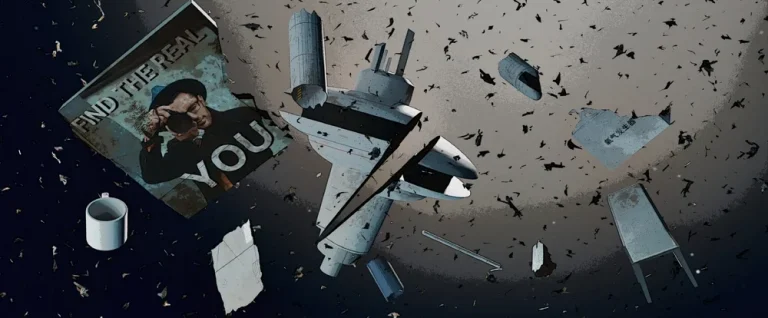
The debris field around Earth.
The First Contact Battles
Humanity’s first confrontation with the Prosecutors began during the era of early space colonization. Nations had only just established orbital habitats and fledgling colonies when the alien force arrived — an entity indistinguishable from either advanced warships or living beings. Their purpose was clear: the complete eradication of mankind.
The opening conflict, later known as the First Contact Battles (FCBs), took place in orbit above Earth. Humanity deployed its most advanced fighters, but conventional weapons proved ineffective. The battles left a vast debris field around the planet, which endures as a grim memorial to the war’s opening chapter.
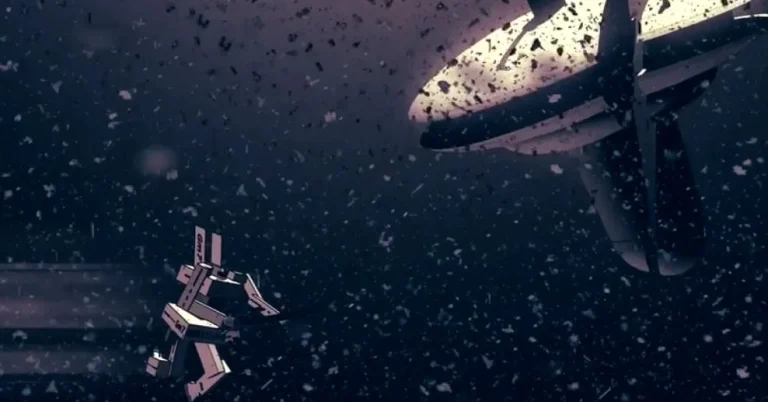
The Gm7 in the Debris Field
The Turning Point
As the FCBs dragged on, human defenses began to collapse. In what appeared to be a final stand, pilot Devon Rubin engaged the enemy in an unconventional way: he fired his ship’s cannons in a rhythmic sequence. To the astonishment of observers, this pattern inflicted far greater damage on the Prosecutors than standard fire.
Rubin did not survive the engagement, but his sacrifice revealed a crucial weakness. His discovery marked the first glimmer of hope in an otherwise hopeless war.
Legacy
Rubin’s actions inspired new research into the resonance between rhythm, sound, and combat. From his sacrifice grew the foundation of the symphony fighter program, the weapon system that would allow humanity to resist and eventually organize a defense against the Prosecutors.
The First Contact Battles are remembered not only as the blood-soaked dawn of the conflict but also as the crucible in which humanity discovered its only effective means of survival.
