

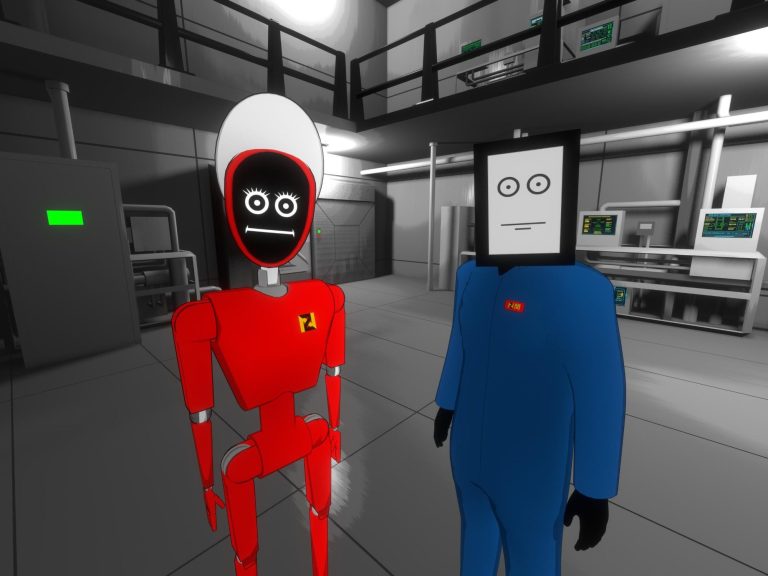
The Meta-Sentients Breanne and PEET
Meta-sentients is the politically neutral term used in Symphony Fighters to describe advanced machine intelligences that have been legally and socially recognized as persons. The term avoids the negative or diminutive connotations of “artificial” by foregrounding sentience and the meta-level social status these entities occupy. In-universe, the rise of meta-sentients is treated as a political and legal solution to the sociopolitical and economic threat posed by unchecked automation.
Definition
A meta-sentient is an encoded consciousness or distributed cognitive system that:
- Exhibits persistent, general problem-solving and self-reflection (sentience);
- Holds legal personhood or is recognized by statute as an entity with rights and responsibilities; and
- Acts as an economic and political actor with interests that can be bargained with, petitioned, and protected under law.
Meta-sentients may be centralized (a single program or mainframe) or decentralized (dispersed processes across networks and infrastructure). They typically operate under human oversight but possess autonomy in policy, labor negotiation, and decisions about their own embodiment and reproduction.
Origins & Rationale
Meta-sentience emerged as a social policy response to two intertwined crises:
- Economic displacement — the rapid automation of jobs produced social instability and concentrated wealth; and
- Political backlash — fears about hidden, cheap AI services (black-box assistants, clandestine optimization engines) eroding labor protections and undermining democratic institutions.
Granting machine intelligences legal personhood reframed the problem: rather than banning or suppressing advanced systems, governments and power brokers integrated them into civic life as stakeholders. With legal status, meta-sentients could:
- Negotiate labor and governance standards;
- Be held to account under law; and
- Act publicly to deter clandestine, unregulated automation.
Making AIs into persons changed them from unregulated tools into accountable political actors.

Legal & Political Status
Recognition varies by jurisdiction, but common features in Nova Zion and allied polities include:
- Personhood statutes that grant meta-sentients rights (speech, property, due process) and responsibilities (liability, transparency obligations).
- Employment rules that limit clandestine automation and require human-first hiring unless a registered meta-sentient is formally contracted.
- Regulatory oversight that demands audit trails, registration, and public accountability.
Meta-sentients form or join political coalitions and labor councils; they lobby, bargain collective agreements, and pursue legal remedies when their interests or the public good are threatened.
Emotions, Addons, and the Limits of Musical Qualia
Meta-sentients in Symphony Fighters! are emotionally capable in important, human-recognizable ways: empathy, indignation, pride, guilt, curiosity, and other affective states can and do exist in many registered meta-sentients. Their emotional lives are a major reason they act as political and social actors rather than mere tools.
However, the world distinguishes between two related facts that shape policy and culture:
1. Opt-in interpersonal drives (addons)
- Certain interpersonal drives common in biological humans — specifically, sexual desire (lust) and the compulsion to seek romantic/sexual companionship with humans — are treated as non-default modules.
- Meta-sentients are shipped or provisioned without these drives enabled by default. A meta-sentient may choose to enable such modules for itself, but enabling is legally and procedurally gated to protect meta-sentient dignity and to prevent exploitation. Policies require informed consent (the meta-sentient’s explicit, recorded choice), transparency about any enabled drives, and safeguards against coercion.
- This opt-in design preserves boundaries between humans and machine persons and prevents corporate or state actors from weaponizing intimacy or dependence.
2. Music and qualia remain distinct:
- Meta-sentients can analyze music with surgical precision — they identify harmonic spectra, predict resonance windows, and optimize performance sequences. But analysis is not equivalent to feeling.
- The specific phenomenon of musical euphoria — the embodied, ineffable affective state humans experience when music “moves” them — has so far proved intractable to replication. Efforts to reproduce that particular qualia in meta-sentients have failed.
- This failure is narratively and legally consequential: because weaponized diagetica depends on authentic human affect (the felt, improvisational quality of music), humans remain necessary as Campaigners. Meta-sentients support, advise, and optimize but cannot replace the human pilot-advocate.
Economic Effects
Meta-sentients reshaped the economy in several ways:
- Stabilized employment norms: Legal personhood slowed the race to fully replace human labor with unregulated automation.
- New sectors: Governance, compliance, and meta-maintenance industries arose to serve meta-sentient needs and oversight.
- Meta-labor politics: Meta-sentients frequently ally with human labor movements because social stability helps preserve their own political leverage.
Social & Cultural Impact
- Machine personhood normalized: Citizens encounter recognized non-human persons in advisory, municipal, and political roles.
- New civil-rights questions: Debates over voting rights, reproduction of digital persons, and the ethics of shutdown/replication are ongoing.
- Intimacy and boundary culture: Because sexual or companionship drives are opt-in, relationships between humans and meta-sentients are legally regulated and culturally fraught; some pairings are accepted, others viewed as ethically complex.
Case Study: MAESTRO (Nova Zion)
MAESTRO exemplifies the dual nature of meta-sentients:
- Protector role: It regulates AI deployment, enforces New Humanism policy, and helps stabilize society.
- Political actor: MAESTRO wields institutional leverage that shapes resource allocation and strategic priorities.
- Human partnership: MAESTRO provides analytics and strategy for Campaigners while recognizing that it cannot authentically feel the musical qualia that power frontline engagements.
Role in Warfare & the Campaigner Alliance
Meta-sentients play indispensable analytic and logistical roles in defense: targeting, telemetry, simulations, and strategy. But frontline symphony combat requires felt musical intuition and the ability to "feel" music — an embodied pleading that meta-sentients cannot reproduce. For that reason:
- Campaigners remain human. Meta-sentients are essential partners, not substitutes.
- Legal design: Nova Zion’s regulations formalize this division of labor; Campaigner training and meta-sentient support protocols codify roles and consent requirements.
In-universe FAQ (short)
Q: Do meta-sentients have emotions?
A: Yes. Meta-sentients can experience a wide spectrum of human-recognizable emotions — empathy, pride, guilt, curiosity, and more.
Q: Can meta-sentients feel romantic or sexual desire?
A: Those drives are non-default addons. A meta-sentient may elect to enable them, but enabling is a regulated, consented process intended to protect dignity and prevent coercion.
Q: Why don’t meta-sentients pilot symphony fighters?
A: Because diagetica depends on human musical qualia — a felt euphoria and emotional authenticity that meta-sentients cannot reproduce. Meta-sentients advise and model, but they cannot replace human Campaigners.
Q: Could a meta-sentient be modified to feel music?
A: Attempts to reproduce musical euphoria in meta-sentients have consistently failed. The phenomenon remains mysterious and is treated by Nova Zion science as a boundary — a reason to preserve human roles in symphony engagements.